

what is the PROGRAM?
The program brings together carefully curated events taking place in 2026 to support the growth of the Verge. At the core of the program lies the unveiling of a temporary installation space/showroom that will double as a 'listening room' featuring a powerful and dynamic sound system which will be used for the benefit of the local community. This marks a new chapter for the Portcorner/Verge: blurring the lines between fashion, design and the ever-present undercurrent of experimental sound and vision that drives us.

TabomBass (2016) by Vivian Caccuri. Subwoofers, amplifiers, mic stands, candles, timed playist and stereo sound.
the SOUND SYSTEM
A Sound system is as good as the sum of its parts and the 'musicality chemistry' that is found in a capable combination of high-end components - such as speakers, subwoofers, preamps, amplifiers, dacs, turntables - and room acoustics, goes well beyond technology, budget and the audiophile context of 'accurate sound'. The closeness to which sound systems reproduce the incoming signal defines that context, but to qualify the context even further, I will put the focus on the last component in the sound reproduction chain: loudspeakers in a room.
I've been on a journey to improve my high fidelity experience since a memorable autumn night back in the early 90's, when a fellow uni student played Lustmord's album 'Heresy' on his dad's Klipsch Heresy speakers (no kidding) to an unsuspecting audience of post-punk aficionados. The result was one of catharsis and candid conversion.
A similar level of excitement was attained while listening to Venetian Snares's 2005 masterpiece 'Rossz Csillag Alatt Született' on a system based around a McInstosh MC152 amp and JBL L100 speakers.
My journey towards high fidelity sound reproduction is one that seeks the highest possible enjoyment of the source material, and fans of experimental and underground music will be conscious that not every record is created equal, and varying decibel levels, nuances in production, intended target audience and emotional trigger, will ultimately dictate the success of one system over another. After all, much enjoyment is to be had listening to Merzbow or Wolf Eyes, and the polished and pristine, are not the primary focus and ultimate objective.
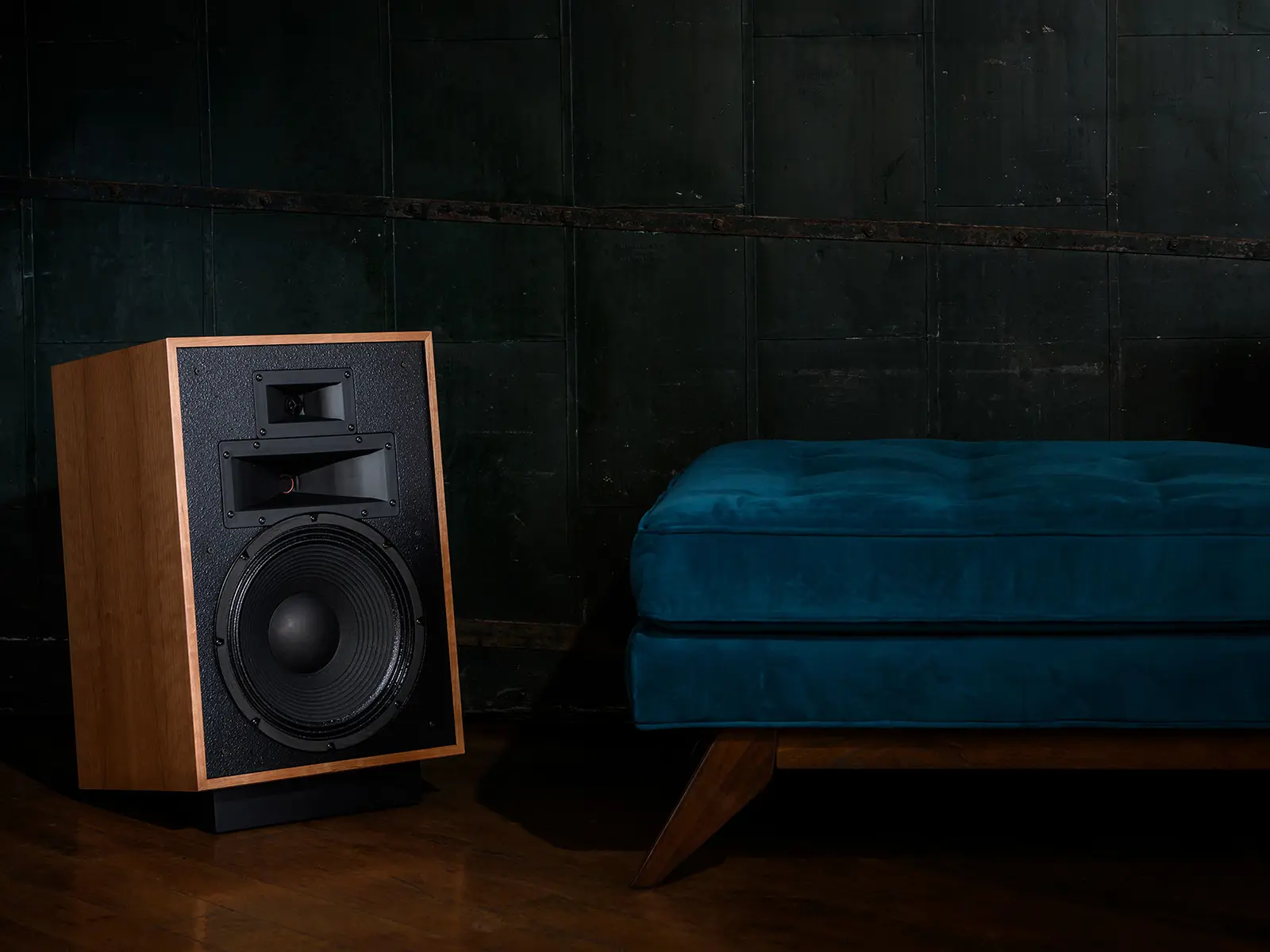
The Klipsch Heresy IV speaker, a reference for high performance audio enjoyment at home.

The iconic Meyer Sound Blue Horn system, gracing many a studio worldwide. If it sounds good in this, it sounds good everywhere.

McIntosh MC152 Amplifier
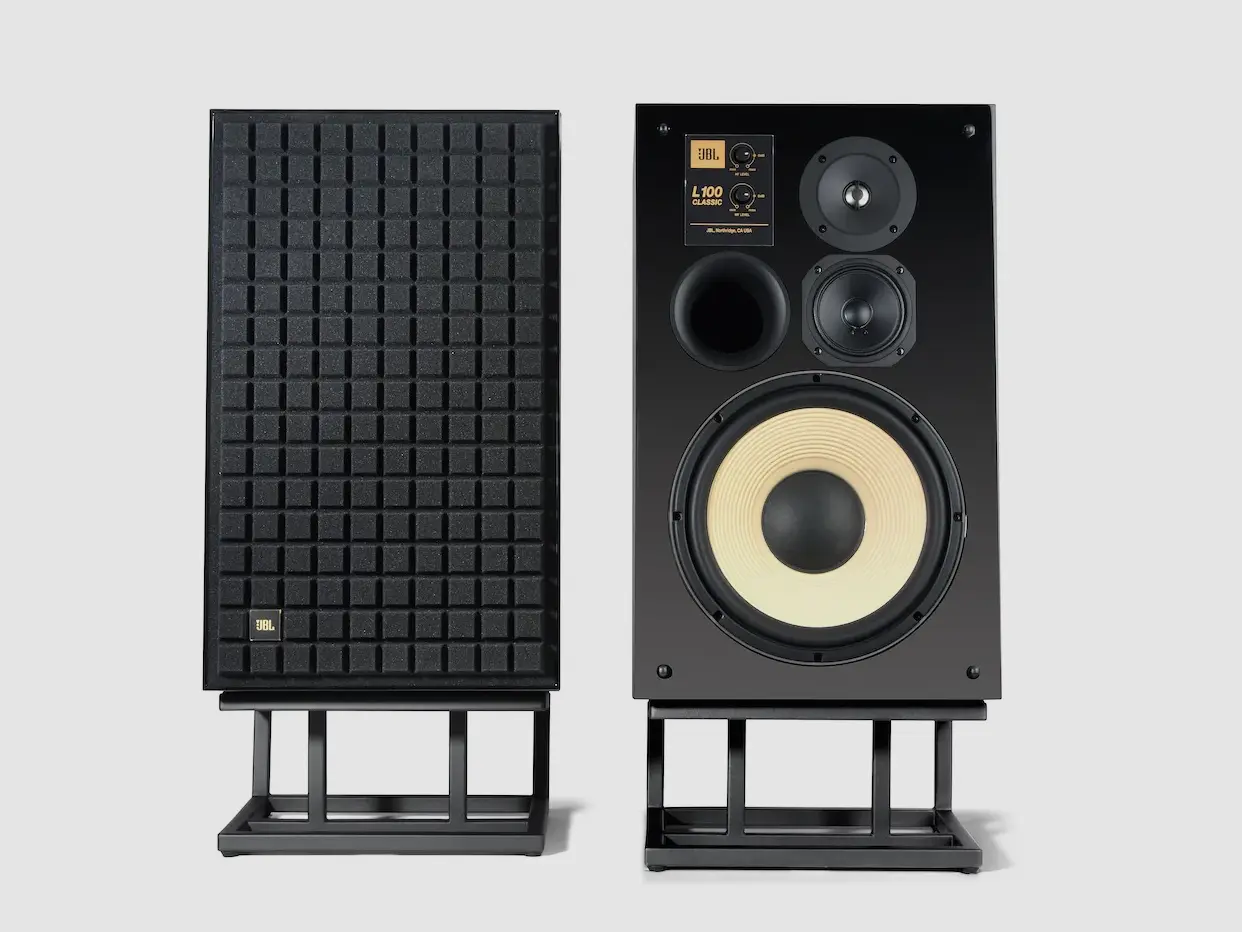
JBL L100 Classic speakers
a LISTENING ROOM EXPERIENCE
These encounters with such startling music ought to spur an immediate response, one that is aligned with a honest reason to improve a system, not the urge to get more expensive gear just because it is supposed to sound better or looks the part. Neighbours and decibels aside, the sheer joy of listening to our music collection through a quality system that you know well and feel is properly responsive, reverberating through rugs and walls, happy to run wild and free, is often too sublime to properly put into words. With an emphasis on sound output, I have set up various combinations of amps and speakers in the last 25 years, so this brain understands a good setup when it hears one.
I've been observing the rise of sound systems of all sizes and budgets in public spaces such as cafés and installation spaces, and diligent bespoke systems everywhere in audiophile forums for some time now. Fuelled by the love of minimal and efficiency, an exciting community that thrives in DIY and listens to contemporary and challenging sounds are changing the face of the audiophile establishment. They want their gear to match their updated sources, from electronic to experimental, bridging audiophile snobbery with real world expectations.
Sometime in 2024 I was lucky to be in London in a case of right place at the right time for Brooklyn-based Devon Turnbull's 'Listening Room Dream No I' experience at the Lisson Gallery.
A fascinating audio delivery and eye candy for music lovers and audiophiles alike, it stemmed the sort of epiphany that only happens once in a long while, especially if you've chased the ultimate sound experience for decades.
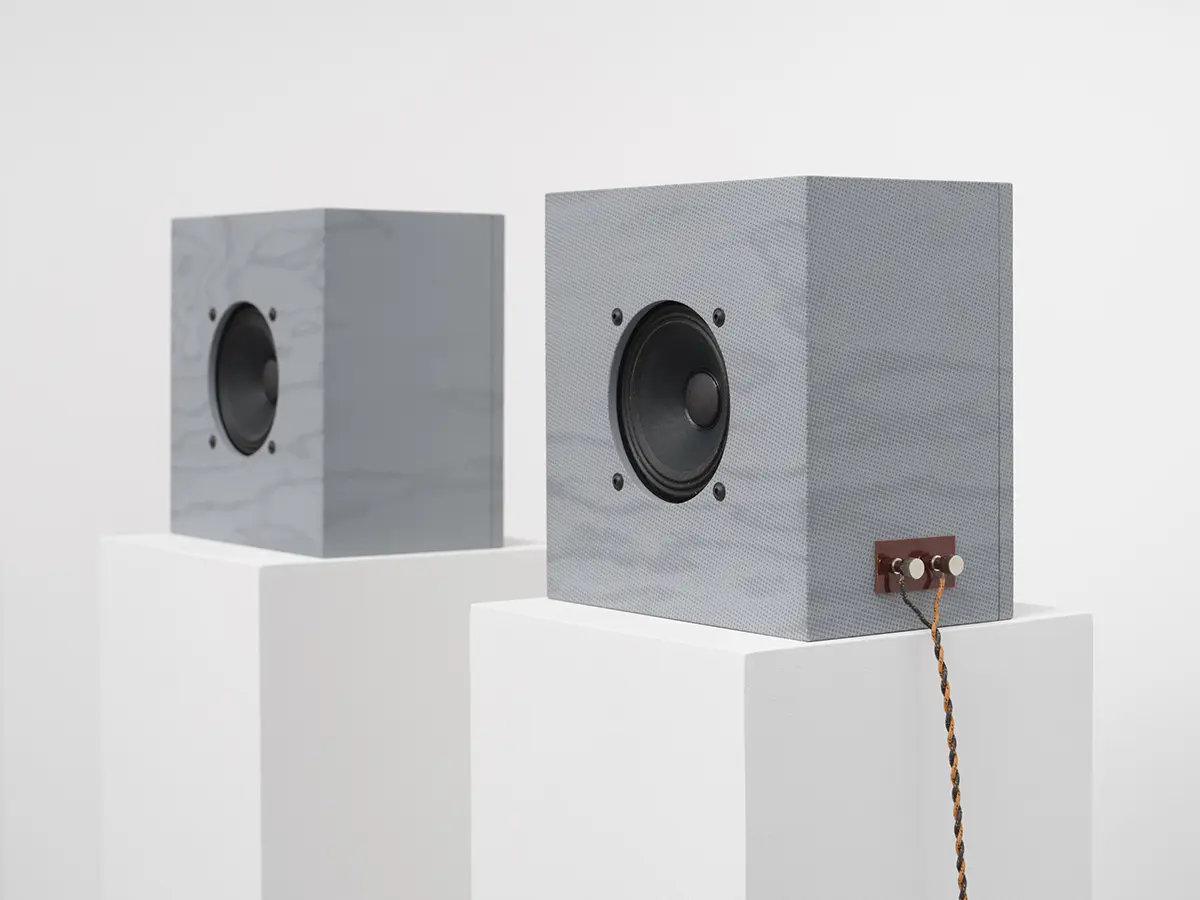
The Ojas / Devon Turnbull: HiFi Listening Room Dream No. 1. Lisson Gallery, London. August 2023
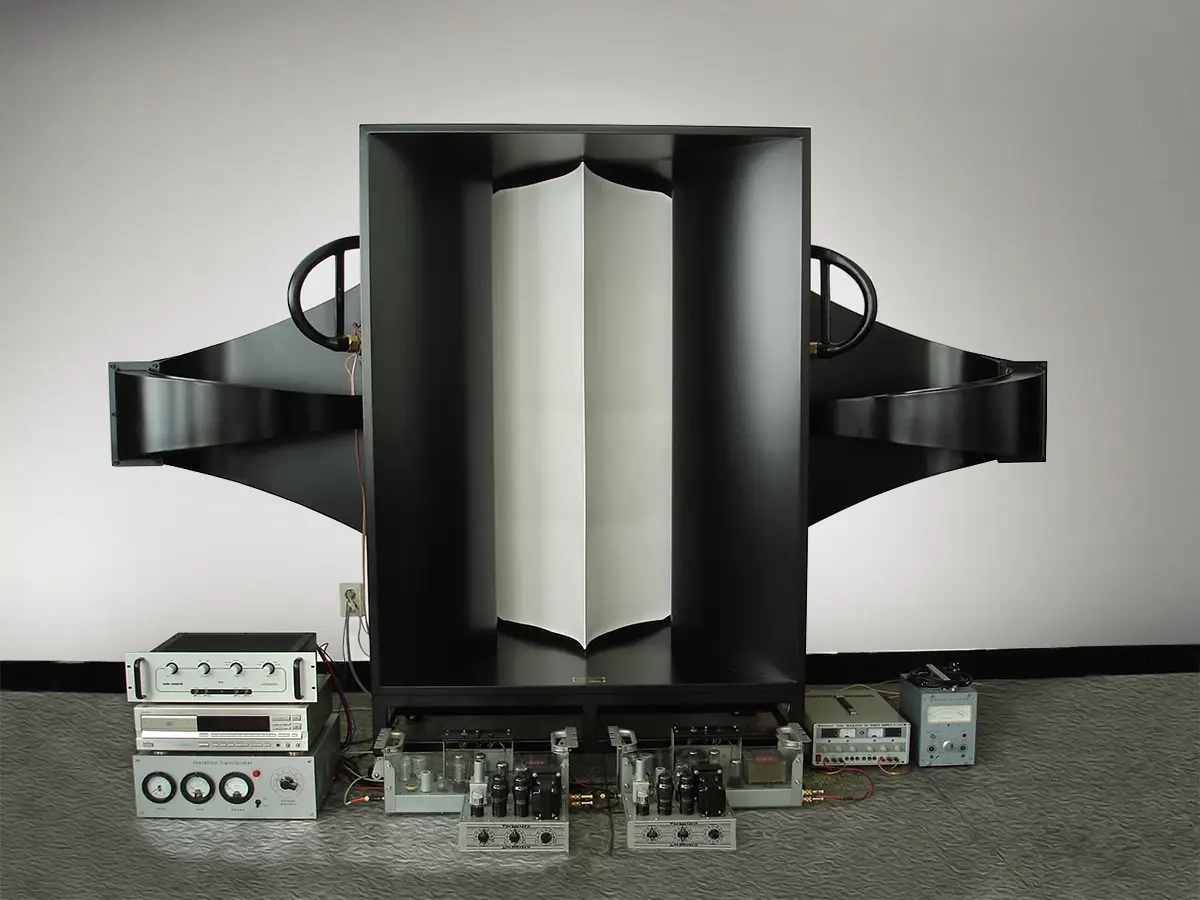
Western Electric 16A Replica, power amplifiers, power supplies. Courtesy of Mr. Byungsoo Yeh.
And what was this epiphany about?
I had been spending some time in and around the Monastery of Pombeiro in my hometown of Felgueiras, near Porto. Shooting the hues of the changing seasons with my vintage lenses, capturing field recordings, and just sitting by and letting thoughts fly... there's an aura of mystery and magnificence in this 12th century monastery complex and its surroundings.
So, a couple of months ago, when preparing this interview with the honourable Mr. Byungsoo Yeh (a South Korean audiophile who is the world’s most respected maker of 1920’s Western Electric Horn replicas), I had a satori moment:
'a Western Electric 16A Horn as the centre piece of a powerful sound system installed in the center of the church, playing contemporary music of a liturgical disposition'
Western Electric horns are the ultimate vintage speaker system and are often described as the Nirvana of speakers with unmatched sound quality, with all this coming from a system developed in the 1930s. Much has been written about these early cinema sound-making behemoths and their electro-mechanical-acoustical genius producing a sound that is truly big, bold, dynamic and lush.
Being born to reproduce music with wide frequency ranges, and needing the room to really shine, they are certainly a perfect match to a church, right?
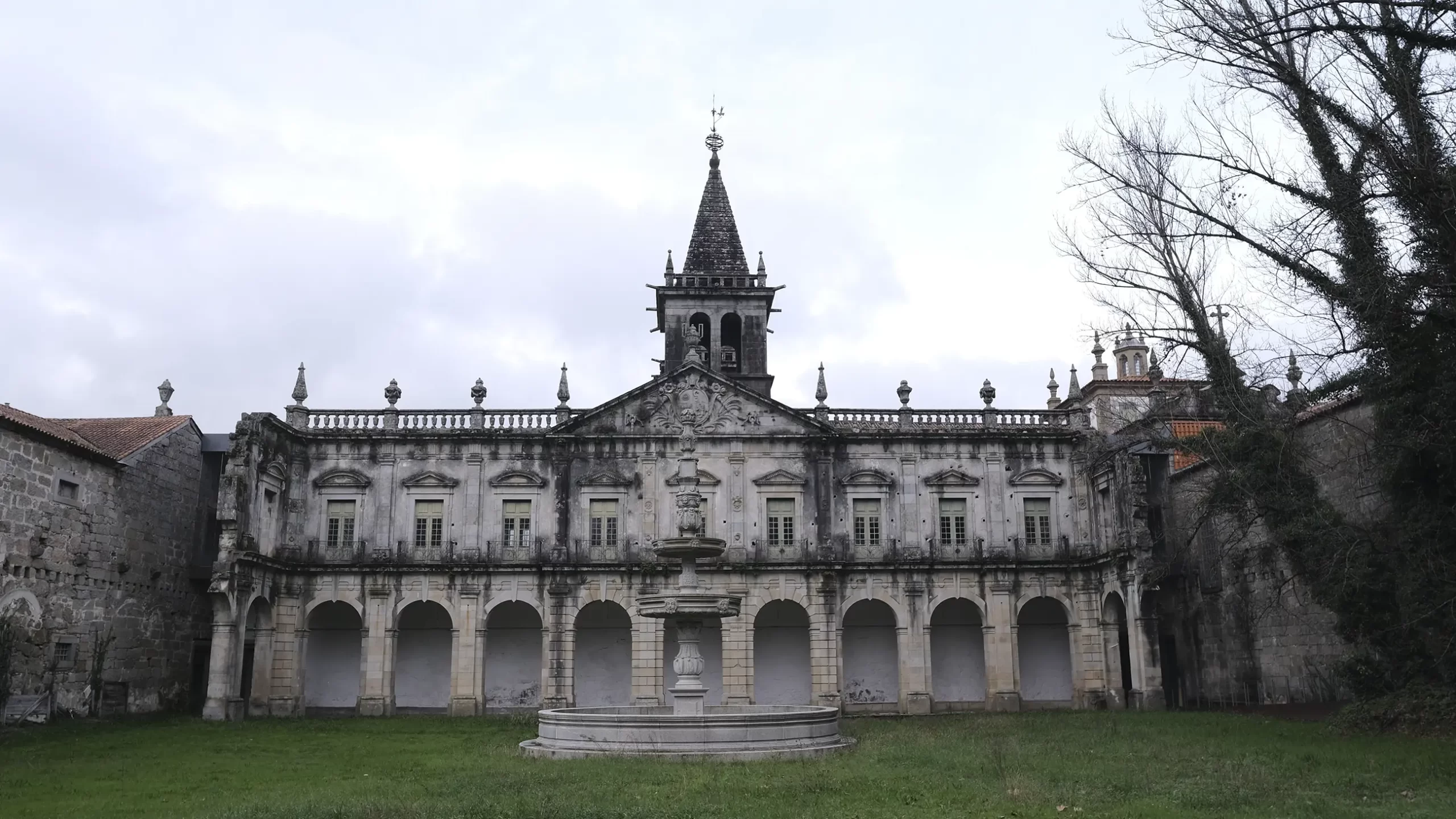
The Monastery of Pombeiro's cloister, with its markedly neoclassical style, remained unfinished since the beginning of the XIX century. Nov. 2024.
the MONASTERY
The Monastery of Pombeiro is a significant historical and architectural site. Classified as National Monument since 1910, the vast building complex sits in a most special place brimming with natural beauty, a dream for 16mm film lovers and field recorders, tucked away in acres of green park and gentle forest, untouched for centuries.
The magnificent monastic church, constructed between the 12th and 13th centuries is one of the most important religious buildings in Portugal. It features a Romanesque design with three naves divided by diaphragm arches and bears witness to the wild tastes and varied styles that have been incorporated in its interior, from the medieval period, Romanesque-Gothic to Baroque.
The interior is generously wide and accommodating, able to fit 150 people and with its three arches standing 10 meters tall, the challenge in perfecting acoustic delivery will be significant but always entrancing. To install a Western Electric 16A horn is a tremendous task, and to make it sound as intended in a church this size is no small deed, but nothing awe-inspiring was ever achieved with no effort.
In order to improve bass frequency, stereo image and soundstage (no Atmos-like trickery HRTF will be available) we will experiment with a number of extra speakers and subwoofers, carefully placed around the WE16A and driven by capable power supplies and amplifiers. Every piece of the final setup will need to be carefully fitted into the space, at varying degrees of height, with no disruption to the permanent instruments and ornaments, and no wall or ceiling touched. Now this is a project.
the PIPE ORGAN
Of special note and consideration to us, music enthusiasts, is the beautiful Pipe Organ. With its gilded carving and polychrome base imitating marble the organ is located in the high choir, in a lateral position, on the gospel side. An identical but false organ was placed on the side of the epistle. The construction of the real organ began in 1766, by the hand of Francisco António Solha (or Solla) according to the inscription inside the instrument:
"Organum Hoc ad maiorem Dei Gloria(m) construtu(m) et virgini Matri ac Parenti (Patri?) Benedicto confectum (Consecratum?) // Artificis D. Fransisci Antonii Solha, imperante R. P. D. Fr. Pedro de Nazare, 2 o vice D. Abbate. Anno Domini 1766."
With the decree of extinction of religious orders, in 1834, the Monastery is closed, with part of its belongings being sold at public auction. The organ, already mute and in bad shape, is saved and remains in its original place. It spends the next 200 years in silence until its full recovery in 2015, as part of a new cultural dynamic for the region, within the scope of the Rota do Românico.
The ensuing overture looks at celebrating the organ being successfully played again to a live audience, on the 25th May 2015, after 200 years of silence, echoing the heavenly sounds of Bach/Gounod's "Ave Maria", being honoured with the opening ceremony of the 4th International Forum on Architectural Heritage Portugal-Brazil.
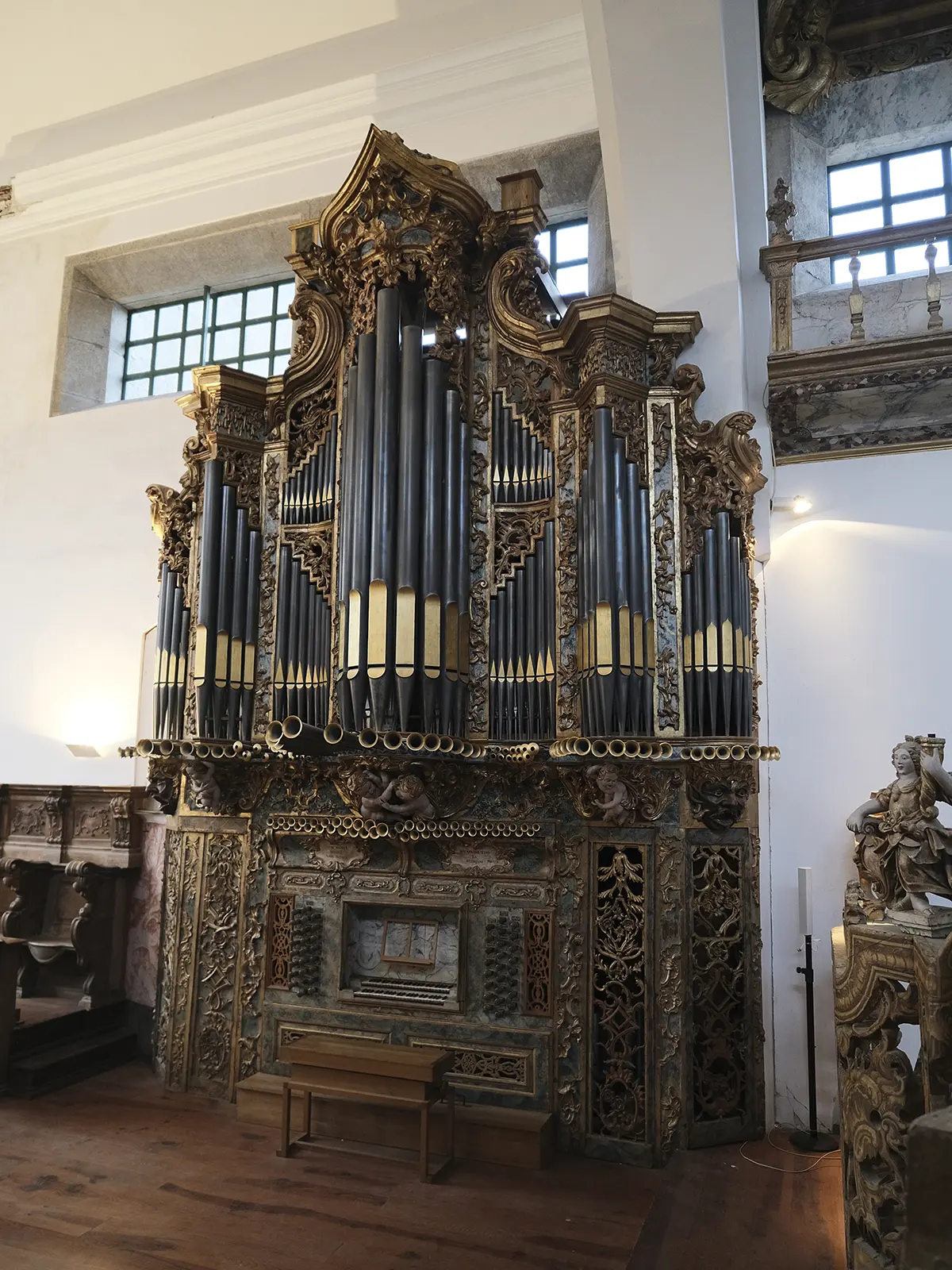
The beautiful Pipe Organ dating from 1766, totally refurbished in 2015.
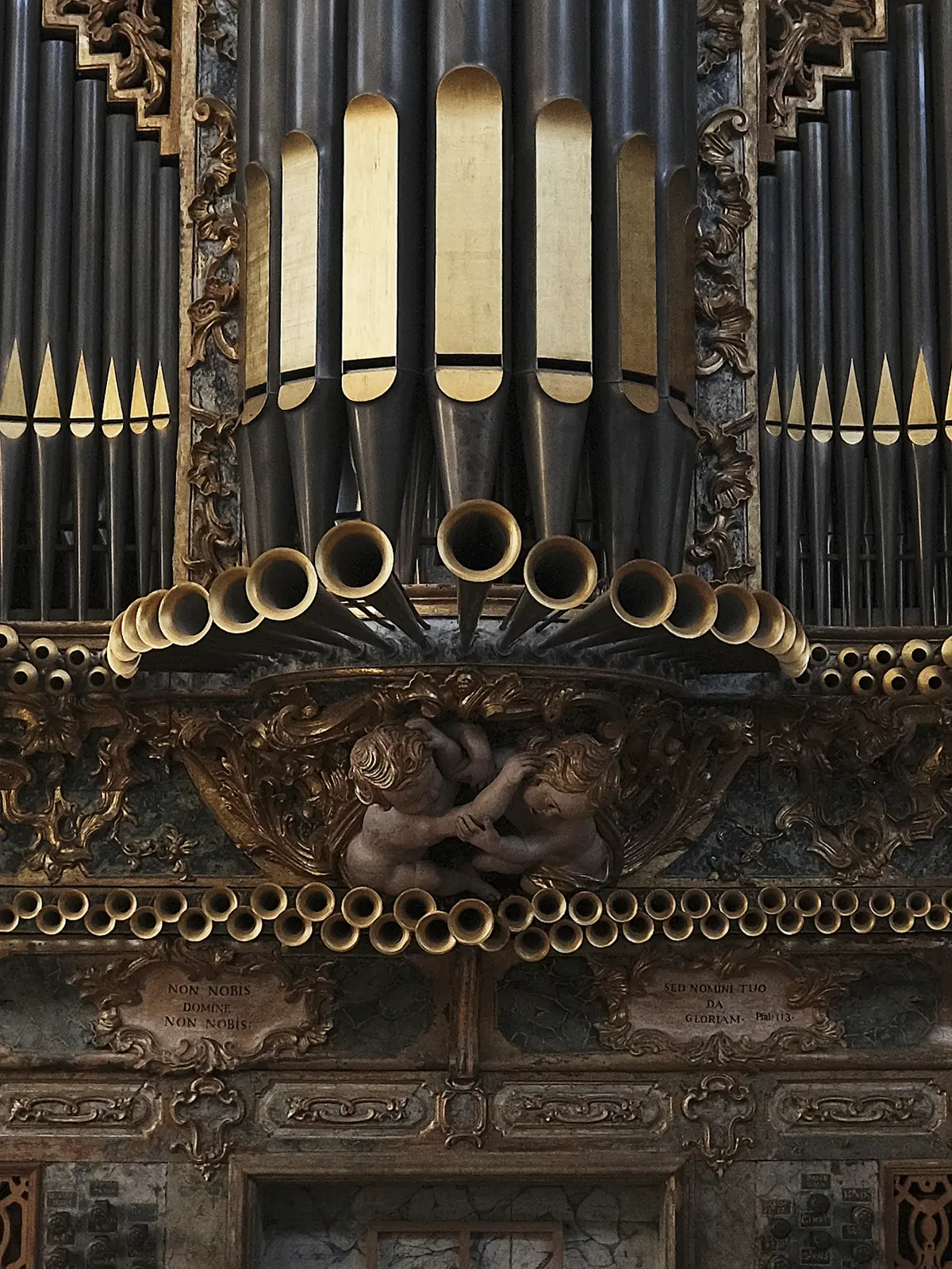
Detail of pipes in the front of the organ.
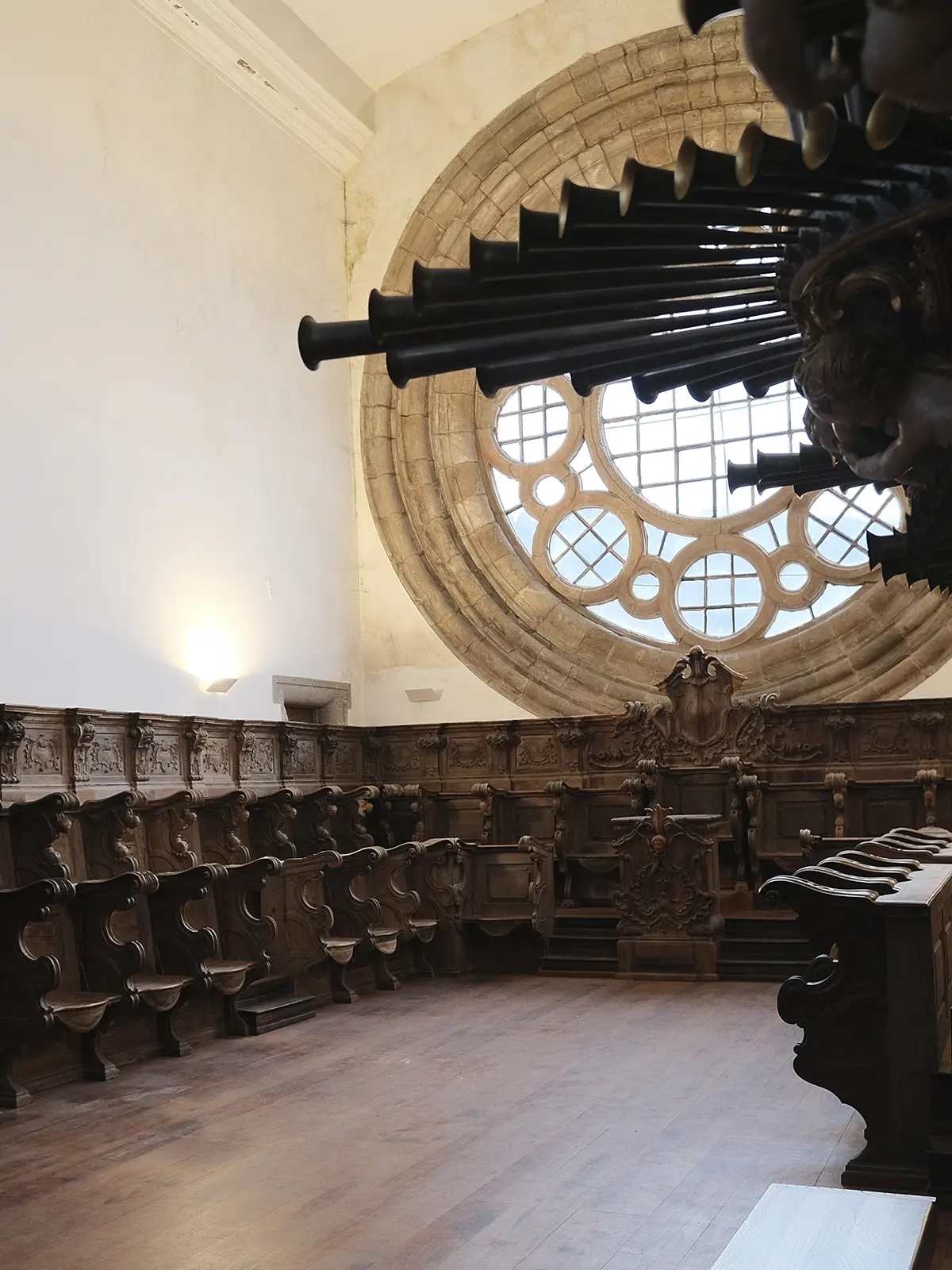
The high-choir of the Church, showing the seating area and part of the tubes to the right (belonging to the 'real' organ).
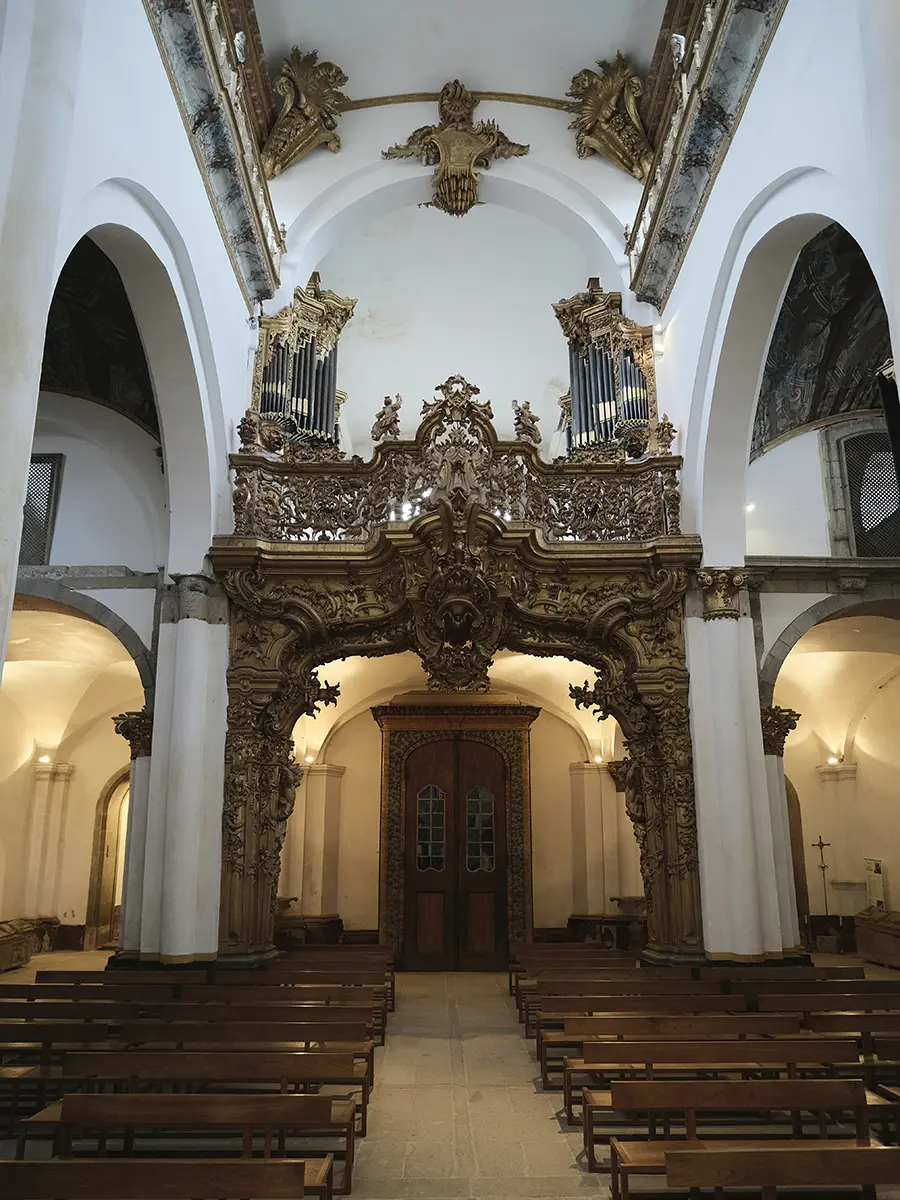
View of the high-choir by the main entrance from the lower back seating area.
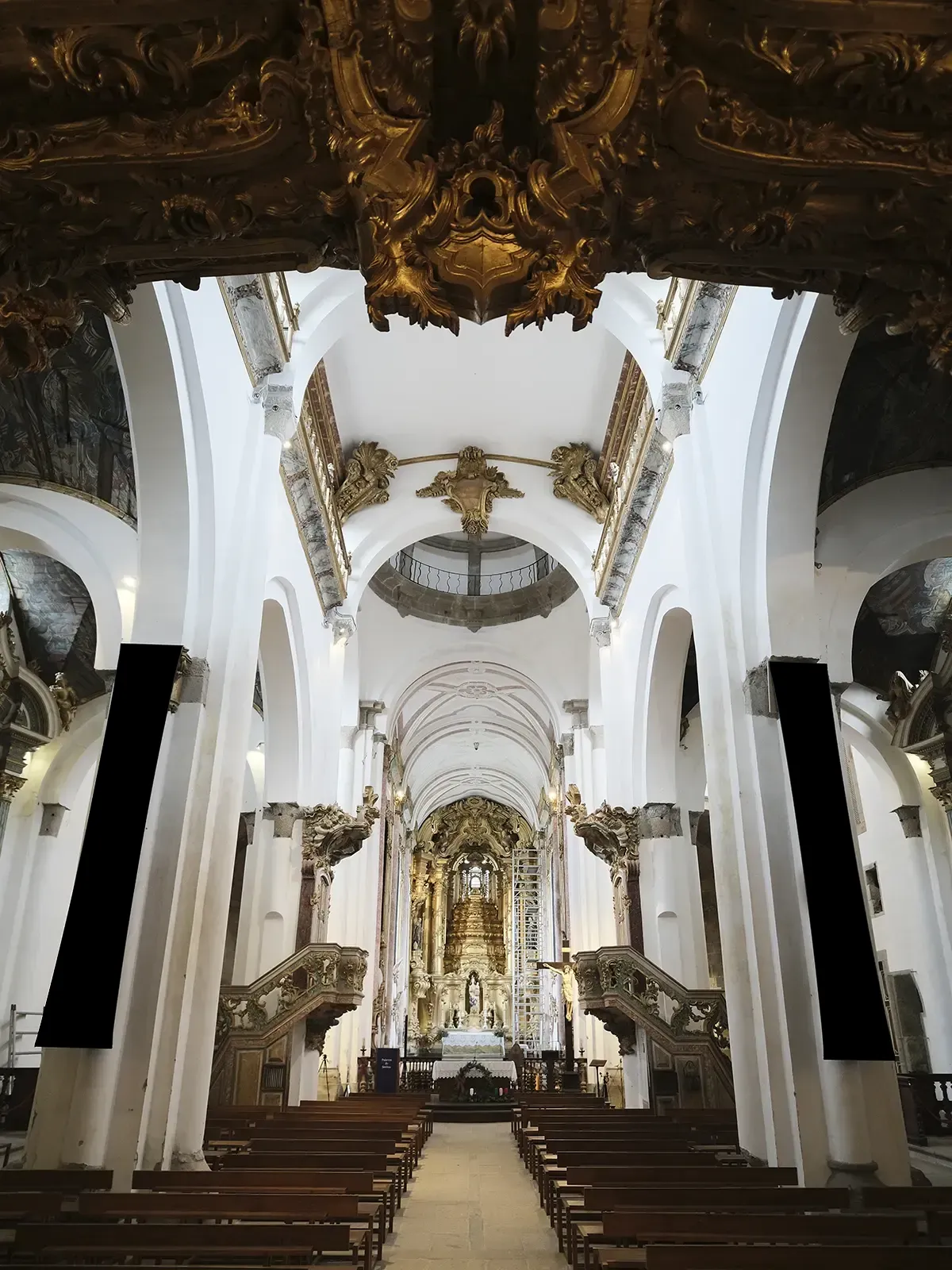
View of the church's altar from the back, shot from underneath the high-choir, showing the centre nave, also the painted wooden ceilings on the sides.
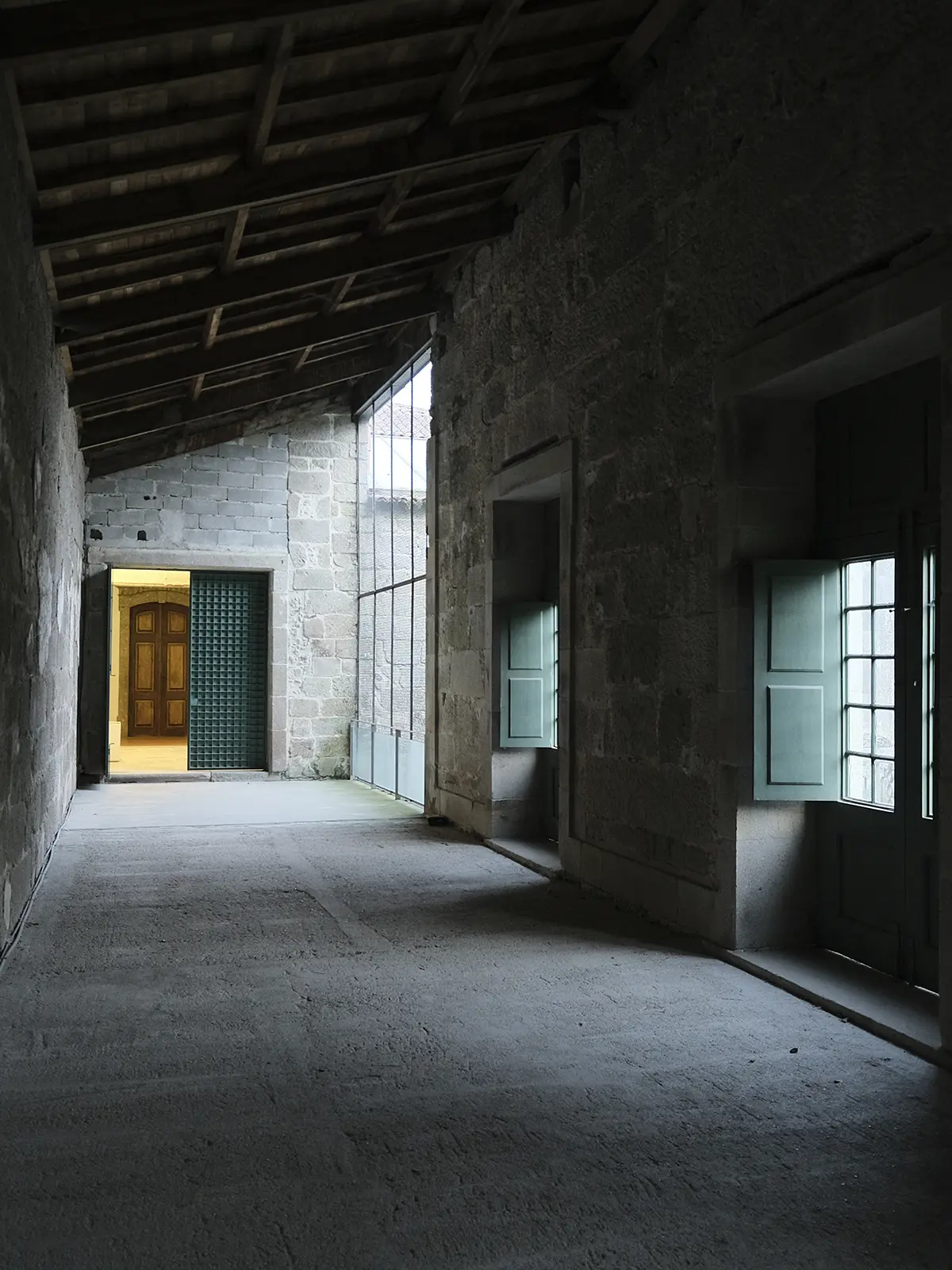
Entrance to the high-choir area in the upper storey.
the SOURCE MATERIAL
On a day to be announced soon, we will invite friends of The Portcorner/Verge and the local congregation to experience our first listening session, a thrilling 1 hour long mix of contemporary music played through our bespoke sound system - hopefully with the unique WE16A at its epicentre - for an unforgettable audio-visual experience we fancy will be the event of the year around here.
The source material is of paramount importance: it needs to work for the system and for the intended event. It needs propose a modern and engaging audio-visual experience which will deliver a much-needed message of hope and light while showcasing the beautiful church and its breathtaking ornamentation in a way never felt/experienced before.
The records and songs will be curated following a well-defined set of criteria, ranging from the quality of production to mastering, sound dynamics to soundstage, from personal preference to stylistic approach to liturgy. No turntables or vintage players, all music will be played in 24-bit 192 Khz FLAC lossless files.
It's a good collection of music, the Verge style, underwritten by dozens of the sort of complementary mixes we've been releasing for the last 5 years, since Covid-19 hit. Its driven by decades of nurturing timeless modern classical and ambient music, of the ethereal and the dramatic, incorporating enough organ and choir sounds to honour such a place and time.
Music that belongs to our own sonic fabric, that informed our taste for ages and dictates how we listen to music today. Music that is delicate and effortless, but also sophisticated and complex. It just so happens we can play it in a church.
A sample of the 'sound and aesthetic' we will reference from can be surveyed below.

Dead Can Dance 'Within The Realm of a Dying Sun' (1987)
listen to 'Persephone (The Gathering of Flowers)'
Selected tracks taken from:
∞ - An imaginary concert at The Monastery of Pombeiro


Updated 03.01.2026